HostGator might be one of the biggest, oldest web hosting companies in the industry, but they’re still making improvements, posting an average uptime of 99.98% over the past 24 months.
Their basic shared hosting plans come with unlimited storage, bandwidth, free domain (for the first year), and a free SSL certificate. They also have great customer service, who connected through a live chat instantly and answered each question within a few seconds each.
Unfortunately, HostGator’s average page loading times let them down (1191ms average). Many extra services, like backups and security, will be tacked on as additional fees. Plus, the renewal rates rise aggressively after your first term expires.
Here’s a complete look at our hands-on test, using third-party data from Pingdom to shed light on their performance.

General Info & Hosting Overview

Pros of Using HostGator Shared

HostGator’s uptime performance used to be an issue in years past. But not anymore, based on our 24 months’ worth of tracking.
On top of that, their customer service was fast and friendly. They’ll help move your site over to their service for free. And beginners will like a lot of the simple, intuitive options directed their way.
Here’s a quick summary:
1. Strong and Stable Uptime of 99.98%
HostGator has posted a 99.98% uptime over the last 24 months. They’ve been consistent with 99.98-100% uptime for several months.That’s not even the best part, though. They’re consistent for a reason: their uptime guarantee says that if they drop below 99.90%, you can receive one month of credit on your account.
Obviously, any planned maintenance or impossible-to-predict hacks aren’t factored into this guarantee. You will, however, have to reach out and ask for the credit by submitting a support ticket to their billing department within 30 days.
We’ve started to see a few other hosts pop up with uptime guarantees recently, and it means all customers win as a result. Competitors coming out and doing this helps raise the bar for the entire industry. It forces everyone else in the market to either match their guarantee and raise the standard level of service or risk falling behind.
Last 12-month average uptime:
January 2020 average uptime: 99.97%December 2019 average uptime: 99.89%
November 2019 average uptime: 100%
October 2019 average uptime: 100%
September 2019 average uptime: 100%
August 2019 average uptime: 99.99%
July 2019 average uptime: 100%
June 2019 average uptime: 99.99%
May 2019 average uptime: 99.95%
April 2019 average uptime: 99.98%
March 2019 average uptime: 99.99%
February 2019 average uptime: 100%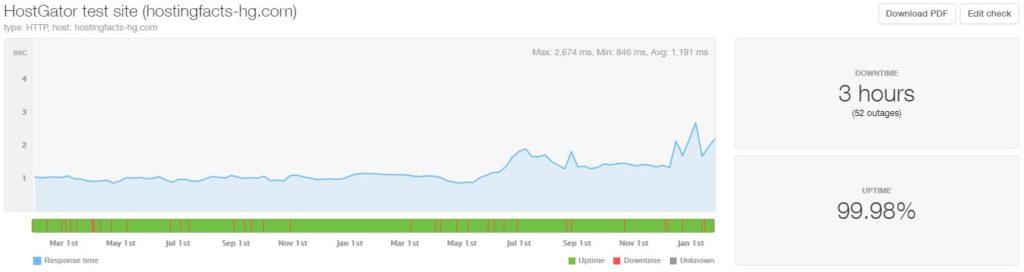
2. Good Support
HostGator provides a knowledge base, phone, email, and live chat support. The last option is the fastest, connecting us to a service rep within about 15 seconds.
We tried peppering them with questions, jumping around from topic to topic, and they never hesitated once. Their staff seems knowledgeable, well-trained, and friendly. It was a good experience all-round.
3. 45-Day Money-Back Guarantee
HostGator is so confident in their service that they extend the industry-average 30-day refund policy an extra two weeks or so to 45 days.That means you can use them for over a full month and still get your purchase price back if any issues pop up.
This 45-day money-back guarantee applies to all shared, reseller, and VPS hosting packages.
The only catch is that this does not apply to HostGator’s dedicated servers, administrative fees, install fees for custom software. After combing through 30+ Terms of Service documents by now, we’ve found that these caveats are fairly common in the hosting industry.
So, for example, if your plan included a free domain name, they’ll deduct the standard fee of $15.00 for the domain from the refund amount.
There are a few other points to make. HostGator’s Terms give them up to 90 days to actually issue a refund. No refunds will be given on check, money order, Western Union payments, or bank wire transfers, either.
Refunds are only available for new plans or accounts. So if you previously signed up for one, and are canceling a renewal or second attempt, you won’t get anything in return.
And last but not least, foreign currency refunds are processed based on the U.S. Dollar exchange rates.

4. Site Security Features Available
HostGator’s shared hosting plans are fairly bare-bones. You’re getting enough for one site, but not a whole lot of extras on top of it.Fortunately, they do offer a few extra security features like the ability to add SiteLock monitoring to your site. This service will run daily, looking out for any potential site breaches or hacks and let you know instantly when they find it.
They also offer Spam Assassin on their email plans to help prevent spam from hitting your inbox in the first place.
The only downside is that SiteLock will cost you a little extra. We’ll expand on this below in the Cons, but the sticker price is $1.67/mo, billed annually at $19.99.
5. Free Site & cPanel Migrations
If this isn’t your first site, and you’re trying to move an existing one over, HostGator’s got your back.You’ll have 30 days after sign-up to get in touch and have them help move any site files, databases, scripts, and even a domain name over for you.
This includes a full cPanel transfer. So if you happened to have multiple site installs (like subdomains for one large site), you’re covered.
All of HostGator’s shared hosting plans come with a single site (or cPanel) migration included. Different plans, like resellers, for instance, will get access to more (up to 30).
A single free site migration isn’t a lot compared to some hosts. But it’s still better than others, like Bluehost, that will charge $150 for moving up to five sites at a time.
6. Very User-Friendly for Beginners
HostGator is tailor-made for beginner bloggers or webmasters.Their site is full of tutorials, walkthroughs, and more to help you navigate the murky world of DNS and data centers.
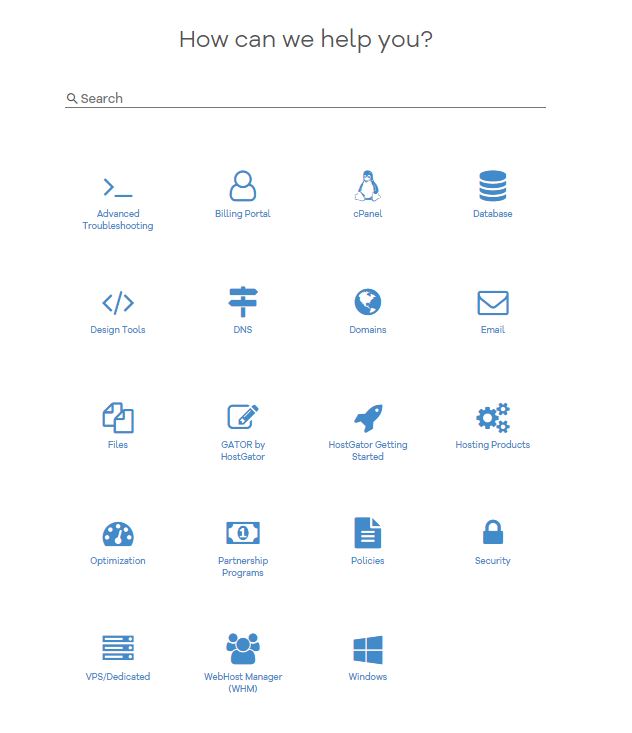
They also have extra features for beginners who are looking to set up a site without the hassle of hiring other people to design, build, and manage everything.
Their website builder, Gator by HostGator, is one of the better ones we’ve reviewed. It comes with free hosting and a domain name, so you just need to purchase a single account for all of the necessities.
The customizable templates are all pretty modern, to begin with, and you can easily customize how they look by dragging and dropping each feature. You’ll also get site analytics and a free SSL certificate to help safeguard your visitors’ personal data (like their physical location).
Gator by HostGator even comes with an eCommerce plan, so you can set up a fully-functioning online store with inventory and more, all without worrying about payment gateways, plugins, or any other messy technology. It just works.
Cons of Using HostGator Shared
HostGator’s consistently strong uptime was, frankly, surprising (in a good way). We’re also fans of their uptime guarantee.Beyond that, their beginner-friendly approach and helpful customer service mean that there’s a lot to like about their service.
Unfortunately, we also ran into a few issues along the way while testing them out. Here are the biggest problems we found:
1. Slow Page Speed (Over 1 Second to Load)
HostGator’s servers had no issues keeping our site up and live for the last year and a half.The problem is that these same servers were consistently slow, too. Their average page loading time over the last 24 months has only been a 1191ms average.
That’s over a second to load relatively simple, text-based content pages. So just imagine what would happen if you fill these pages up with thousands of words and dozens of high-resolution images. Yeah, not good.
Slow page loading times have been shown to impact your visitor’s experience directly. And that has a trickle-down effect to hitting your bottom line, too.
There are a few things you can do to speed up your site without switching hosts. But if your host is consistently slow, it means you’ll constantly be fighting a losing battle.
Last 12-month average load times:
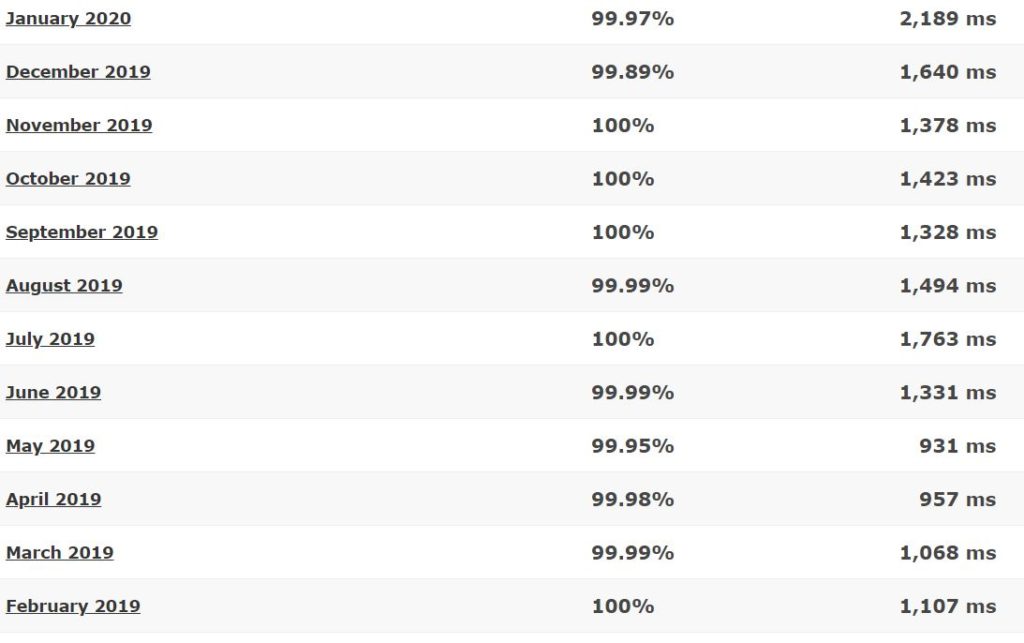 HostGator average speed 2019-2020
2. Lots of Extra Fees for ‘True’ Backups, Gmail, and Malware
HostGator’s shared hosting plans are cheap, with introductory pricing starting at only $2.75/month (for 36 months).Their cheapest plan (“Hatchling”) comes with a single domain name, one-click installations of popular apps like WordPress, Joomla, and more, unmetered bandwidth, unlimited storage, and a free SSL certificate. Basically, all of the core features you need for a complete website.
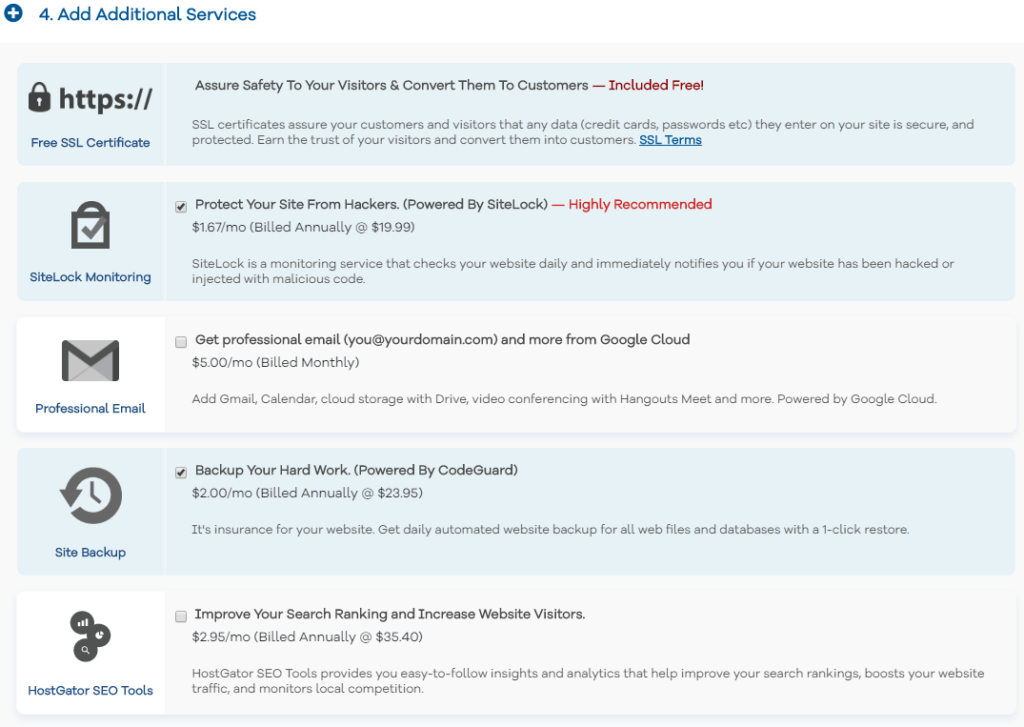
However, that’s about all they provide in their default plans. All of the ‘extra’ stuff, like site backups, Gmail access, SiteLock monitoring, and SEO tools will all cost you extra when it’s time to checkout.
It’s disappointing because many of these features are worded carefully on the site, like “available,” to make you think they’re included. Browse the other top hosts we’ve reviewed and you’ll see that many of them, in fact, do throw these into their basic pricing.
It’s only when you get to the very end of the process, when you go to enter your billing information, that you’ll realize all of these extra features will cost you, well, extra.
Gmail is the standard $5/month or $60/year per user, which is their normal pricing. But then SiteLock will cost you $19.99/year, CodeGuard (to backup your sites) will cost you $23.95/year, and they don’t even keep many previous versions of your site on file in case you run into any problems.
So while the initial plan seems inexpensive at first, it starts to become pretty pricey when all is said and done.
3. Industry-Standard Pricing ‘Tricks’
In addition to extra fees, HostGator pulls two pricing tricks that are pretty standard in the industry.The first is advertising a low rate like $2.75/month, only for you to realize that it requires you prepaying for a full three years to actually get it. Otherwise, you’re looking at $10.95/month for an actual single month’s worth of service.
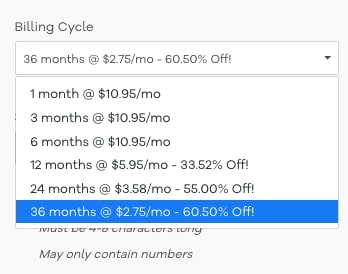
That’s just the beginning, though. Because on top of this, HostGator’s renewal pricing jumps dramatically after your initial plan expires.
So let’s say you go ahead and lock-in that low rate for three years. You’ll be getting a pretty good deal, no doubt.
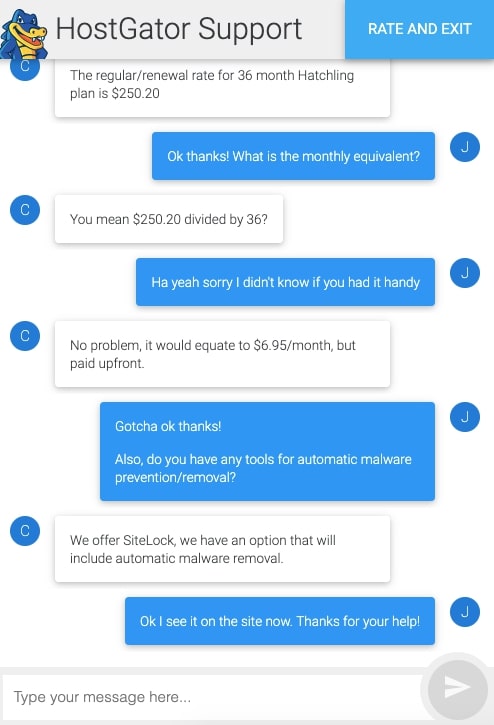
The trouble starts when it’s time to renew your plan in three years. At that point, your monthly rate for the same plan jumps to $6.95/month (or $250.20 total) — more than double what you just paid for the same exact service.
Essentially, they’re preying on the fact that after a few years, the likelihood of you wanting to switch services is pretty low. So you’re locked in for a while (like a cable company or gym membership).
Lots of other hosts we’ve reviewed pull this same stunt. However, that doesn’t mean we have to like it.
HostGator Pricing, Hosting Plans & Quick Facts
Shared Hosting: HostGator has three shared hosting plan option to choose from: Quick Facts

- Ease of Signup: Easy signup process.
- Payment Methods: Credit Card, PayPal.
- Money-Back: 45-day money-back guarantee.
- Hidden Fees and Clauses: Introductory pricing is only available for long-term plan purchases. Renewal rates will also more than double. Extra services, like backups and malware monitoring, are all extra fees, too.
- Upsells: Lots of upsells.
- Account Activation: It can take up to 24 – 48 hours to activate your account.
- Control Panel and Dashboard Experience: cPanel.
- Installation of Apps and CMSs (WordPress, Joomla, etc.): They make it easy to install popular apps and CMSs in a few steps using Quick Install.
Do We Recommend HostGator Shared?
Not really.But not for the reason you’re probably thinking.
HostGator’s shared hosting does offer a lot of benefits. The uptime has really improved over the past year or so. The customer service was good. And the plethora of beginner-friendly options makes it user-friendly.
However, a combination of the slow speeds and extra pricing hikes make it too expensive to be considered a decent value.
The reason we wouldn’t recommend it, though, is because they have a better option in the store that does actually deliver a good value.
HostGator’s WordPress Cloud hosting is a little more expensive initially on paper, but the performance is also substantially better.
So we’d recommend taking a look at that one, first, because you’ll probably end up paying the same at the end of the day when you throw in these extra fees and price increases.

Comments
Post a Comment